
The Supreme Court's Final Stretch
A look at the remaining disputes that could define the Court's 2025–26 Term.

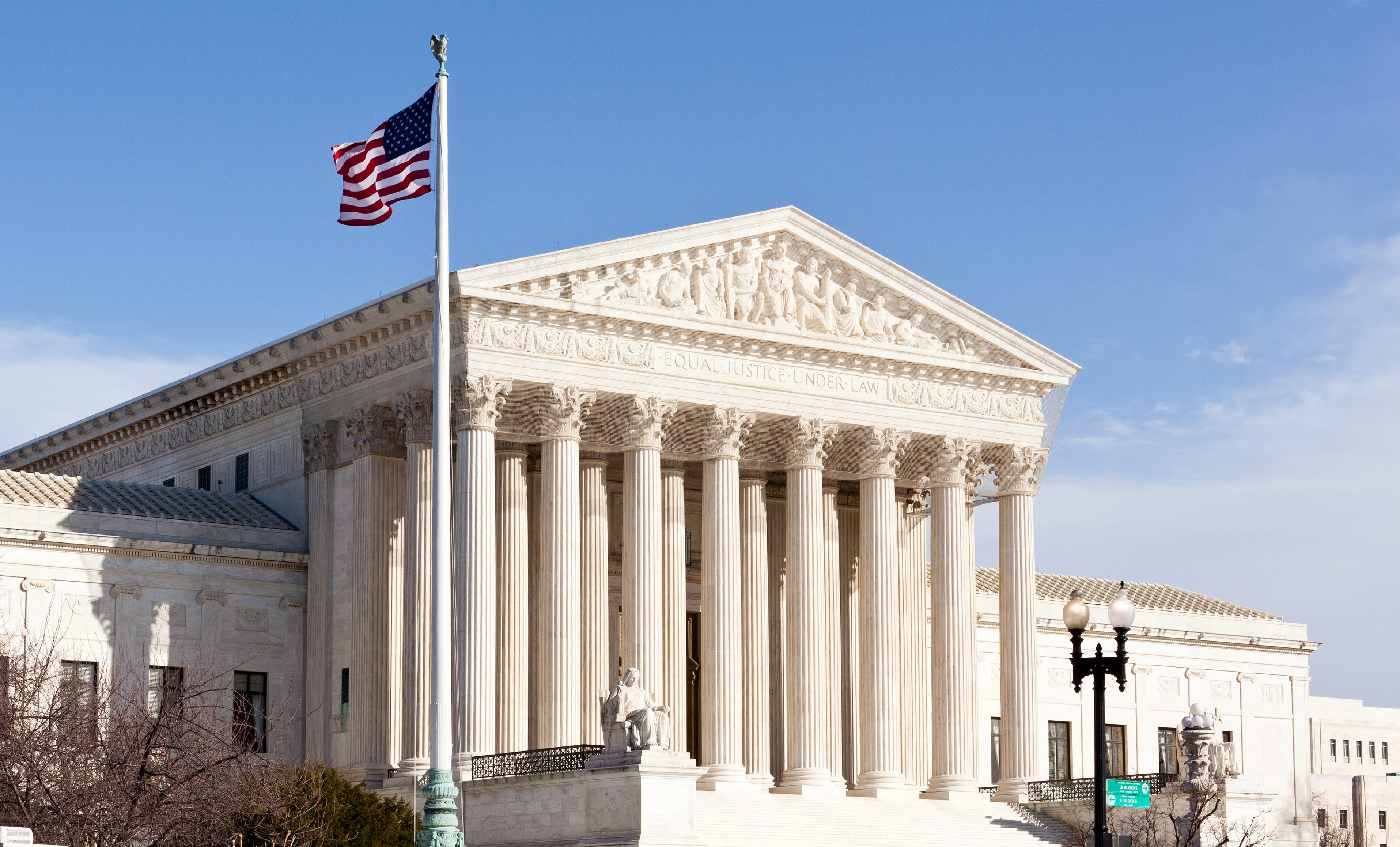
As the Supreme Court enters the final weeks of its Term, the justices have yet to rule on several high-profile cases involving presidential power, birthright citizenship, election law, gun rights, immigration, and digital privacy.
Several of those cases have the potential to reshape longstanding constitutional doctrines and alter the balance of power among the branches of government.
Here’s what you need to know.
Executive Power and the Administrative State
Two of the Court’s most significant cases ask a fundamental question: how much control should the President have over federal agencies?
The leading case is Trump v. Slaughter, which stems from President Trump's removal of Rebecca Kelly Slaughter from the Federal Trade Commission. The administration argues that limits on the President’s ability to remove FTC commissioners violate the Constitution’s separation of powers, while Slaughter argues that nearly a century of Supreme Court precedent permits Congress to provide such protections. The case is widely expected to determine the fate of Humphrey's Executor, the Court's 1935 decision upholding limits on a president's removal authority.
The Court is considering a similar question in Trump v. Cook, which involves President Trump's attempt to remove Federal Reserve Governor Lisa Cook. Unlike the FTC, however, the Federal Reserve occupies a unique role in the nation's economy. As a result, this case could reveal whether the justices view the Federal Reserve as constitutionally distinct from other independent agencies even if they expand presidential removal power elsewhere.
Citizenship and Immigration
Among the most closely watched cases of the Term is Trump v. Barbara, which concerns the scope of birthright citizenship under the Fourteenth Amendment. The Court is reviewing President Trump's executive order that denies automatic citizenship to certain children born to noncitizen parents.
The challengers argue that the order conflicts with the Citizenship Clause and longstanding Supreme Court precedent recognizing birthright citizenship. The administration argues that the Citizenship Clause does not guarantee citizenship to children born to parents who are unlawfully or temporarily present in the United States because such children are not fully “subject to the jurisdiction” of the United States.
Another challenge to the Trump administration’s immigration policies concerns Temporary Protected Status (TPS) for Haitian and Syrian nationals. Mullin v. Doe asks whether the administration may end TPS, a program that allows people from countries affected by war, disaster, or other extraordinary conditions to live and work legally in the United States for a limited period.
The administration argues that decisions about TPS are largely committed to executive discretion and should receive limited judicial review. The challengers argue that the government failed to follow the legal requirements for ending the program.
Mail Voting and Campaign Finance
Two election-related cases could affect how federal campaigns are run and how ballots are counted.
Watson v. Republican National Committee concerns when a mail ballot must be received in order to be counted in a federal election. The challenge targets a Mississippi law that accepts absentee ballots postmarked by Election Day if they reach election officials within five business days.
The Republican National Committee argues that federal law requires ballots to be received by Election Day itself. Mississippi contends that voters meet the legal deadline when they cast their ballots by Election Day, even if delivery takes longer. A decision for the RNC could force several states to change how they handle late-arriving mail ballots in future federal elections.
National Republican Senatorial Committee v. Federal Election Commission asks whether federal limits on coordinated spending by political parties violate the First Amendment. The NRSC argues that political parties should be able to coordinate more freely with their own candidates when spending campaign funds.
Supporters of the limits argue that coordinated spending restrictions help prevent donors from using political parties to get around contribution limits to candidates.
Transgender Athletes in Women’s Sports
The Court is also considering a pair of cases, Little v. Hecox and West Virginia v. B.P.J., which challenge state laws that limit participation on girls' and women's sports teams to biological females.
The challengers argue that under the Equal Protection Clause, excluding transgender girls is unlawful discrimination. The states argue that sex-based athletic classifications help ensure fair competition and preserve opportunities for female athletes. B.P.J. also raises a question about Title IX, the federal law that prohibits sex discrimination in schools.
The Second Amendment
The Court continues to confront major questions about the scope of the Second Amendment following its recent decisions expanding gun rights.
Federal law generally prohibits firearm possession by people who are unlawful users of controlled substances. In United States v. Hemani, the justices will decide whether this restriction violates the Second Amendment as applied to Hemani.
Hemani argues that the government cannot point to a sufficient historical tradition of disarming drug users to justify the restriction, while the government argues that legislatures have long possessed the authority to disarm individuals who pose a danger to themselves or others.
Wolford v. Lopez involves a challenge to a Hawaii law that generally prohibits licensed gun owners from carrying firearms on private property that is open to the public unless the property owner gives permission.
Gun-rights advocates argue that the law makes it far more difficult to exercise the right to carry a firearm in public, but Hawaii argues that the law protects private-property rights and public safety.
Fourth Amendment and Digital Privacy
Chatrie v. United States arises from a bank robbery investigation in which police obtained a “geofence warrant” requiring Google to identify devices that were located near the crime scene during a specific period of time. Investigators then used that information to narrow their investigation and ultimately identify a suspect.
Chatrie argues that geofence warrants amount to unconstitutional digital dragnets that can sweep in location data from large numbers of innocent people. The government argues that the warrants are a valuable investigative tool and can be tailored to protect privacy while helping solve crimes.
The Court’s decision could determine the constitutional limits on law enforcement’s ability to obtain location data from technology companies and shape the future of digital privacy in the smartphone era.
Looking Ahead
The Supreme Court still has 23 argued cases awaiting decisions before the end of the Term. While this article focuses on several of the most closely watched disputes, every remaining case carries consequences for the parties involved and for broader areas of federal law.
Traditionally, the Court aims to resolve all argued cases before rising for its summer recess at the end of June, meaning the pace of decisions is likely to accelerate in the weeks ahead. The Court has already indicated that it may release rulings on Thursday, June 11, and additional opinion days are expected to follow as the justices work through the remainder of the docket.
For continuing coverage of every decision, order, and major development, subscribe below and follow SCOTUS Wire on X.